
You’ve built an Online Store? Congratulations! Now you need to start growing your business by generating more customers. With Digital Marketing, you can grow your store online with new web traffic as well as engage return users.
We find too many agencies focus on the quantity of the impressions or clicks being generated than the quality. When you work with eCommerce specialists like Fox & Lee we understand the intricate details of how your business works and develop strategies that are conversion and revenue-focused.
We use our expert knowledge to drive customers to your website, not just numbers on a spreadsheet. So, here are the 5 ways we can use digital marketing to grow your online store:
Whether you call it Pay Per Click (PPC), Search Engine Marketing (SEM) or Search Engine Advertising (SEA), it’s important to get in front of people who are searching for your business.
We can increase your store’s visibility and maximise the opportunities Google and/or Bing present to find new customers. SEA is a popular marketing option and we craft strategies that incorporate Search, Display and Shopping.
When you work with Fox & Lee you have the opportunity to have professionally designed Display advertising retargeting the efforts of your Search campaign. We optimise your Shopping presence to help put your best foot (or in this case, products) forward.
Your online store has a valuable opportunity to generate organic search traffic. Fox & Lee can work with you to develop a long term strategy focused on ranking for keywords and staying above competitors.
We can design SEA and SEO campaigns to work in unison and maximise results. Also, we can include SEO as part of your Website Care Plans or growth strategy.
We have the expertise and technical knowledge to achieve your SEO goals through anything from content strategy to web developmental options.
No matter the platform, Fox & Lee can develop a social strategy that targets your ideal customers. From the social-commerce of Facebook and Instagram to the B2B market opportunities offered by LinkedIn, we can reach your customers where they live online.
Social advertising should be sharp and visual. The digital strategists and expert designers at Fox & Lee, make you stand out from the crowd.
Complimentary to any SEO efforts made, we can action a content creation strategy that keeps your messaging fresh and your site up to date with industry and consumer trends.
We can adapt our tone and style to create content that is in line with your branding and marketing objectives. Professionally written content can be shared across your social network to aid in establishing your desired online image.
From automation to promotion we can create email templates that speak to your customer. We focus on creating visually striking templates paired with results-focused copy.
We can automate email marketing that works in conjunction with your online store. Whether you need new reviews or to promote an upcoming sale, we can make the process easy and repeatable no matter the size of your customer base.
Fox & Lee develop strategies focused on your unique business needs. We achieve this through a return on investment focused and personalised metrics. We combine platforms and services to create the best full-service approach for your business.
Other agencies focus on channeling traffic from the services they specialize in. Fox & Lee’s holistic approach to Digital Marketing is to design solutions that are specific to your business and your customers. We develop customer-centred and conversion-focused messages wherever your customers are.
We’d love to start talking strategy and get to know your goals, so either contact us or call us on 03 9043 1039, so we can start introducing new customers to your online store.
These days, you’re nobody without a social media account. It doesn’t matter if it’s your grandma’s cookie business or a local band who hasn’t released a song in years: you’ll find them on Facebook. So it goes without saying that your ecommerce store needs to be integrated on social media too.
In this article, we’ll discuss how social media can help you with your success. We’ll tap into the different ways of how to make good use of the different channels and we’ll explain how you can take full advantage of the platforms in order to see your efforts pay off.
Integrating your social media networks with your ecommerce store will help you drive more traffic and generate more sales. And with the use of social media growing each year, you know it’s time to give your social media marketing a little boost! Let’s discuss how.
The first use of social media that can be highly important for your ecommerce store, is driving traffic to your business. Social media is ideal for introducing your brand to the world, attracting new customers, showing your products and collecting positive reviews. It’s the platform where you reach out to your audience and engage in conversations with them.

The Iconic promotes their new items on Facebook in order to drive traffic to their website
There are different ways of driving traffic to your online store through social media presence. You can either let organic posts do their charm in order for people to get to know your brand. Or you can invest some money in ads and discover a whole new world of potential customers. Let’s have a look at both.
The first way doesn’t cost you any money, but it will cost you some more time (we know, time is money too). Nevertheless, will the effort you put into driving organic traffic from your social media account to your website result in longer-term benefits. And to get this organic traffic, you’ll have to focus on quality social media content.
Creating valuable content for your social media channels is a great way to reach your audience. This can be content of all sorts and forms, ranging from awesome how-to articles to in-depth video guides. You can even work with a funny infographic or an inspirational quote.
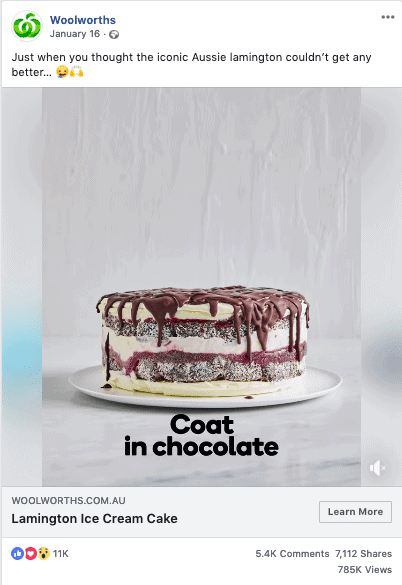
Woolworths uses a recipe to drive traffic to their famous Lamington cake
It doesn’t matter what content you create, if it’s good, people will interact with it. This can be in liking, commenting or sharing your content – which will make it visible for a broader audience. It will help you get your brand known with new customers, but it will also get back on top of your existing customer’s mind.
Another way to increase traffic to your ecommerce business is by spending some money on social media advertising. Even though you might be a bit reluctant towards spending parts of your marketing budget on ads, it will be worth the investment. Ads on social media offer you the opportunity to work with a highly targeted audience, where you can reach the exact right people at the right moment.

Cela promotes their phone cases through sponsored posts
There are different ways that social media advertising will be able to support your online shop. You can, for example, introduce your company to the world, by working with brand awareness ads that show your unique selling propositions so people find their way to your website. Alternatively, you can advertise different products in your shop, which will bring interested buyers directly to the right products they’re interested in. Thirdly, you can retarget website visitors that have already shown interest in certain items, reminding them of your products and giving them the little push they need.
A second important part of social media is your customer retention, where you maintain the relationship you have with both new and existing customers. By being present on social media, you hang out where your customers are too. It gives you the option to integrate your brand into your customers’ conversation, making it a lot easier for them to reach out to you and trust you.
A good example is customer service, which has been a lot more approachable now it’s mostly done on social media. Picking up the phone and being on hold for hours, used to be a good reason to not reach out to a certain company – but sending a message on Facebook or Tweeting to them is a lot easier. Make sure you listen to your customers on the platforms where they are trying to reach you. If they have inquires about their order, the size or shipping status, you have to make sure you can help them out in a fast and easy way.

Another advantage that social media offers to both businesses and their customers are online reviews. Online reviews have basically replaced word of mouth recommendations, making them more important than ever to attract new customers. There are a lot of platforms where people can leave their opinion, but social media remains a favourite. Work on collecting those reviews by sending out emails asking people for one, and make sure to comment on them once you’ve received them.
In line with your customer service is the instant messaging feature. It’s never been easier for people to get in touch with their favourite brands, so it’s up to you to keep that ease. People can reach out to you for a number of reasons and you should be prepared to be at the other end of that line. If you don’t have the means to have a full team permanently present, ensure to install automated responses and address the matter as soon as you’re available.

Dan Murphy’s has a personal approach to engage customers to get in touch with them
One last way to keep your customers engaged (and potentially drive traffic to your website) are the live videos and stories various social media platforms offer these days. On Facebook, you can go live with your company and consumer are getting more fond of this type of content. 82% of the people even prefer watching a live video over reading a full blog post. Live streaming is not only a great tool for publicity but can also lead to higher conversion rates. Think of introducing new collections, Q&A’s or giving tutorials on how to use your products.
Another tool that Facebook, Snapchat and Instagram offer are stories. Customer loves this type of content since it’s fast, honest and interactive. They are a great way of encouraging people to send a direct message. Stories can also help you collect data about customers through a simple poll. Working with stories can help you in promoting your items or giving customers a peek behind the scenes. Both of these more personal approaches to integrate social media and will make them feel more connected to your brand.

Social media doesn’t only help you drive traffic but also helps you to sell directly to your customers. The reason we didn’t make this chapter the first of our article is that people have to be ready to buy. That’s why we recommend focusing on your brand awareness and loyalty first. But when the time is right, social media is the platform to turn your leads into conversions.
Facebook offers a Facebook store, where your customers can directly buy your items without having to leave the social platform. You can upload your products to the Facebook store manually. Alternatively, you can work with integrations that will automate this process for you. Once you have set up your Facebook store, you can tag your products in different posts. The Facebook store is also used to create Dynamic Products ads to reach a targeted audience.
On Instagram, you can tag products in your posts through Instagram shopping. This feature will highlight the products that are for sale, offering customers more information when clicking on them. To make the purchase, customers will have to click through to your website. Alternatively, you can install links in your stories, where people have to swipe up to get to the right page.

Myer makes good use of the Instagram Shopping feature by tagging their products in the posts Integrate Social Media
One last way how social media can help your ecommerce store grow is through influencer marketing and user-generated content. Both are a good way of generating brand awareness and creating engagement, giving your online store the attention it deserves.
By focusing on influencer marketing you let a celebrity endorse your products or your brand. These ambassadors can use their own social media pages to promote certain items. By sharing these items with their followers they will create a relationship of trust with their own audience.

Australian influencer Lauren Bullen helps promote Hairbust products to Integrate Social Media
Another good tactic for your social media strategy is user-generated content. This means you will use images, videos or product reviews of your customers’ to promote your own brand. And by letting a third party speak for you, you will not only create more engagement but also gain more trust.
When you create a marketing strategy you will inevitably face the issue of defining your customers. Understanding your audience – the people you will direct all your marketing efforts to – is essential to any strategy, be it your Instagram page or your SEO tactics. And the best way to do this is by developing personas for marketing strategy.
Buyer personas are fictional and highly stereotyped characters that represent your customer groups. Typically, these personas include the age, profession, interests and digital habits of your customer, but there’s often also room for their pain points, personal characteristics or family situation. All together these personas should give you an understanding of:
Once you have these personas, they will function as your groundwork for when you create your content, implement your ad strategy or send out emails. All of your marketing efforts should be done with these potential customers in mind.
But how to create these personas? In order to find inspiration for your personas, we have 3 easy ways to get to know your audience.
Data always has some interesting insights for you. If you already have a set-up business, it’s a good idea to start with looking at your current customer base. This can be a CRM-system, where you keep track of the data of your customers, or simply your Google Analytics platform, that offers you a lot of free information about your website visitors.

Based on this data you can discover age brackets, locations and other demographics of your audience. You can group these facts together into 3-5 fictional buyers personas, where you make sure the majority is represented. Furthermore, you can add info on their interests, devices or browsers, based on the details Google Analytics can offer you. If you keep track of purchases, you can even add product categories of the items they purchased before.
Comparable to Google Analytics, you can also take your Facebook Insights under the loop. Facebook collects a big amount of data of all its users, and some of this is made available to you too. Even if you don’t have a running business yet, and are therefore lacking a customer base, you can make use of some handy tools online. Similarweb, for example, lets you discover emerging trends and market shares.
A second way to gain more information about your customers is by simply asking. Interviewing your audience will give you immediate access to a lot of new insights. Ideally, you would want to sit down for a one-on-one chat with your customers, but sending out a survey can be a good replacement when you’re facing limited time or resources.
Creating a survey is easy with tools such as SurveyMonkey or Google Forms. You can choose to include a widget or pop-up on your website, or send out an email asking people for their opinion.
When you’re desperately looking for info about your customers, you might look over the fact that you can just ask your coworkers. Especially the ones that are often dealing with customers will be able to give you a lot of information data won’t reveal.
Your sales team, for example, is dealing with your customers on a daily basis. It’s recommendable to ask them about the customers they deal with, and especially the hot leads. Which ones seem more inclined to convert? Those are the ones you want the details of.
Your customer support team might have some insight knowledge for you as well. They often deal with your unhappy customers, but this means you can learn a lot about their pain points, the channels they reach out to you, their complaints and their user behaviour.
What is your go-to tactic when developing personas for marketing strategy?



